A PDF order form, filled in online.
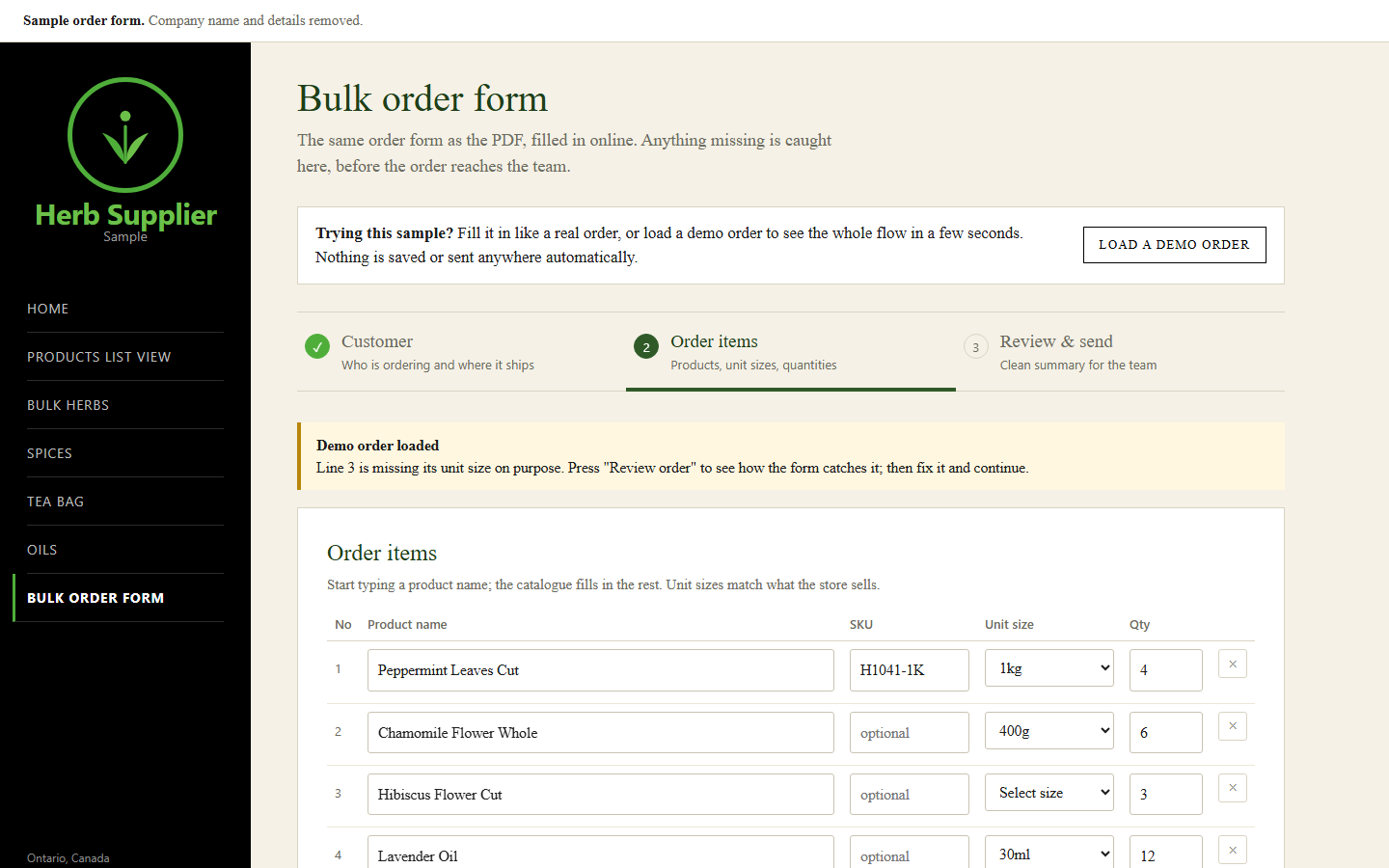
A herb and spice supplier in Canada takes bulk orders on a PDF form that customers print, fill in by hand and send back. A PDF cannot tell when a size is left out, so someone may have to go back and ask.
The sample is the same form in the browser. Product names come from the catalogue, a missing size or quantity is caught before the order goes out, and a pasted list from an email is matched line by line. The team gets a clean summary and a spreadsheet row per item.
 Open the sample ↗
A helpline inbox, sorted before anyone opens it.
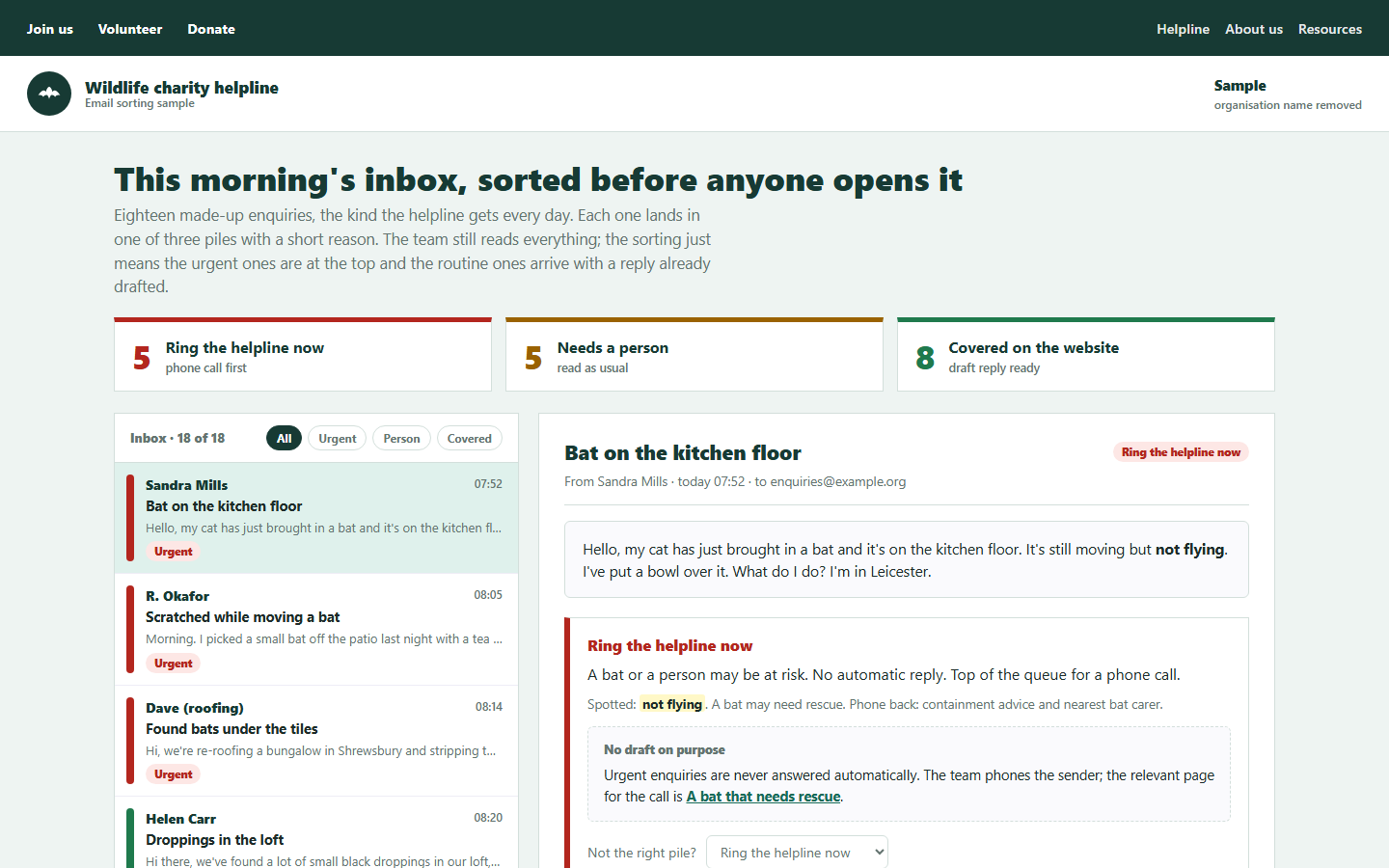
A wildlife charity in the UK answers a shared helpline inbox. A question about a garden sits next to an injured animal on someone's kitchen floor, and both wait in the same queue.
The sample puts each email into one of three piles with a short reason: ring now, needs a person, or already answered on the website. Routine ones come with a draft reply to check. Urgent ones never get an automatic reply, and the team can move any email to another pile.
 Open the sample ↗
Same-day shipping: how many of each on the shelf?
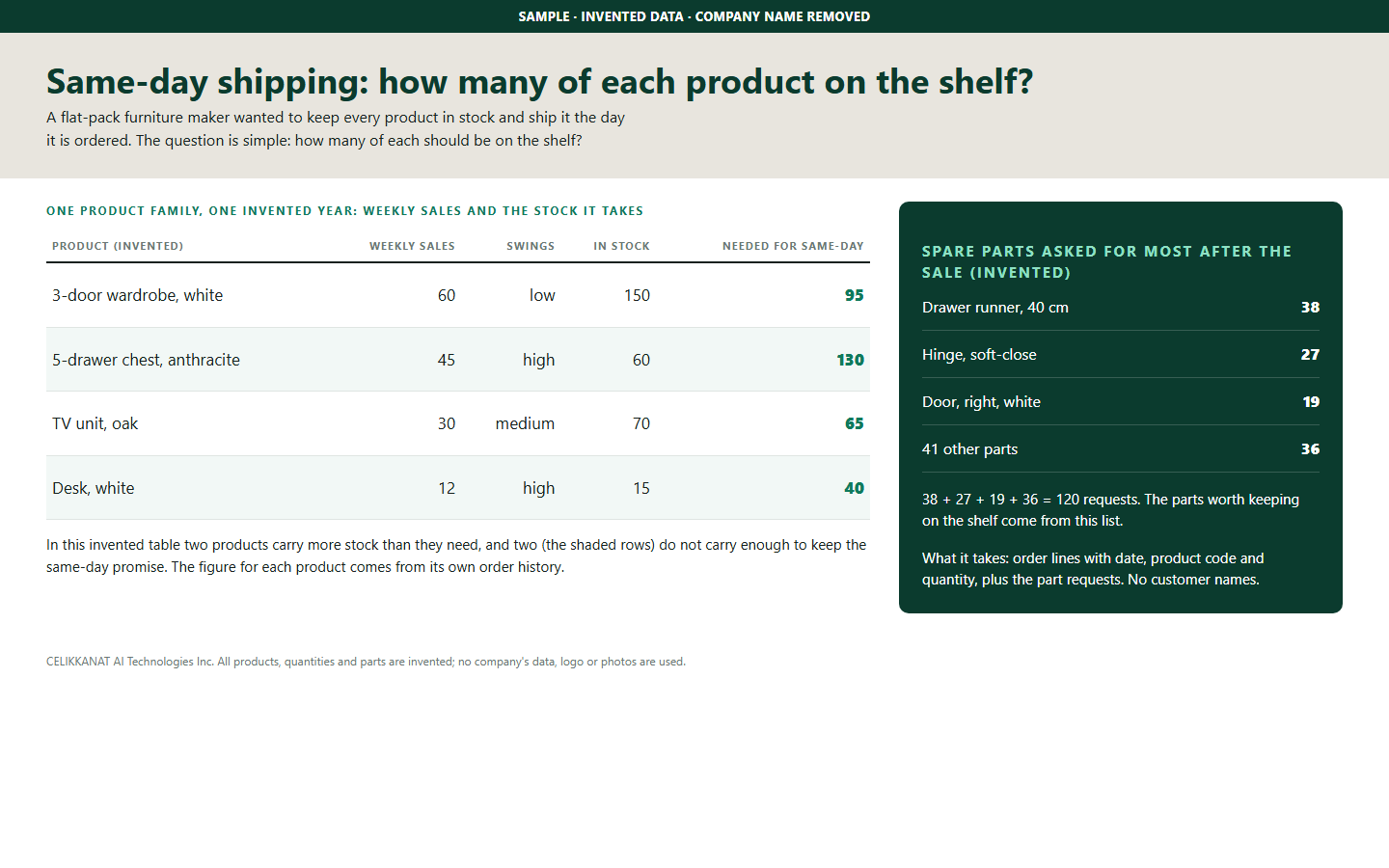
A flat-pack furniture maker wants every product in stock so it can ship the day it is ordered. A fast seller with steady sales needs less stock than people expect; a slow one with big swings needs more.
The sample is one page: weekly sales, how much they swing, what is on the shelf and what same-day shipping would take, plus the spare parts customers ask for most. It needs order lines only, no customer names.
 Open the sample ↗